
Bambu Lab / NEWS & INSIGHTS
Meet Bambu Lab H3C
The H3C announcement introduces Bambu Lab’s Swaptek tool-changing system and a new approach to printing with multiple materials.
- Brand
- Bambu Lab
- Article type
- Product launch
- Source date
- 2026-11-03
A printer organized around tool changing
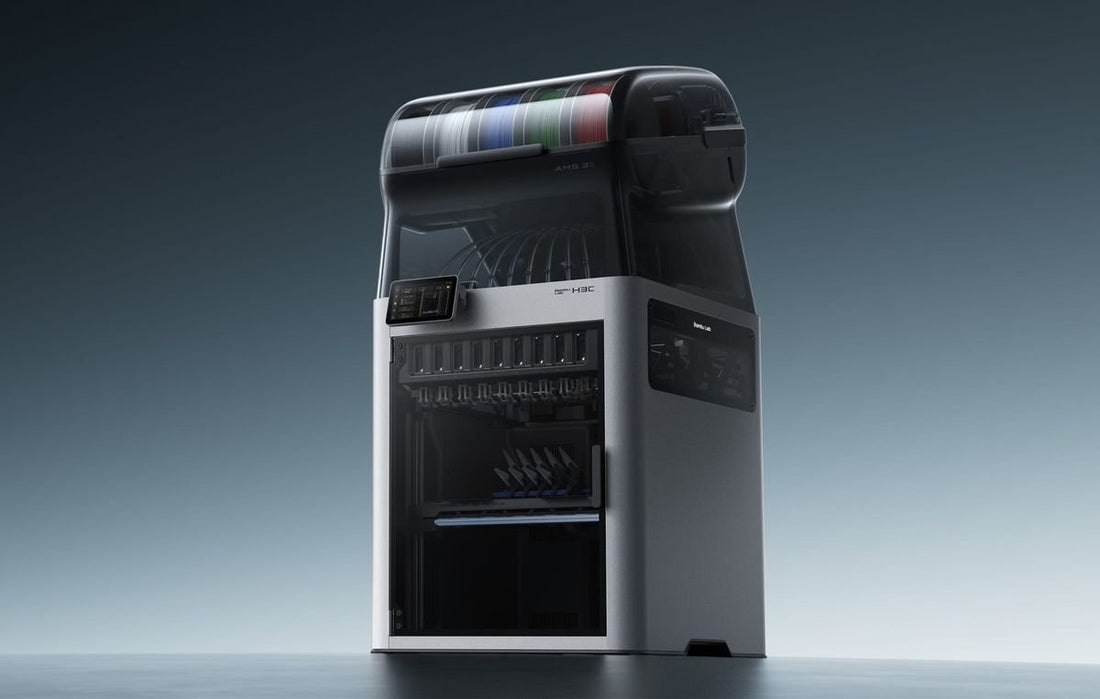
Bambu Lab introduces H3C around its Swaptek architecture: nine print tools with separate filament paths and heating. The company describes preheating the next tool and switching materials in under six seconds under its stated conditions. This is a different approach to a job that repeatedly changes materials throughout a part.
Material handling is part of the system
The announcement pairs Swaptek with the FlexFeed extruder and integrated AMS 3H. FlexFeed supports 1.75 mm and 2.85 mm filament, including designated flexible materials. AMS 3H manages storage and feeding, with two drying positions and a stated maximum drying temperature of 85°C. The release also describes mixing nozzle sizes and optional connections that extend material handling.
Compare the whole job, not a single speed figure
DRT recommends choosing a representative model before deciding what the new architecture is worth to a workshop. Count the material changes, identify the surfaces that need a smaller nozzle and note any flexible or support material. Compare total elapsed time and material consumption for that complete job. Tool-change speed is useful information, but loading, drying, preparation and finishing also affect the time until a usable part is ready.
Build a configuration around your materials
A purchasing brief should name the materials, the largest required part and the intended production volume. Include any drying needs, spare consumables and post-processing tools. For a first evaluation, choose one repeatable project with a measurable pass condition. That makes it easier to decide whether a configuration addresses a current need, and gives the team a documented baseline for future jobs.